Fragment
An ongoing audiovisual series in which unstable forms gather, separate and reorganize through motion, sound and spatial transformation.
2025–2026 · Ongoing real-time audiovisual series · Max/MSP Jitter
Fragment is an ongoing real-time audiovisual series developed in Max/MSP Jitter. Beginning with a custom particle engine, the series follows how visual form gathers, loosens and reorganizes through continuous motion. Each fragment develops a different spatial condition while remaining inside the same field of instability, movement and temporary structure.
Process Sketches
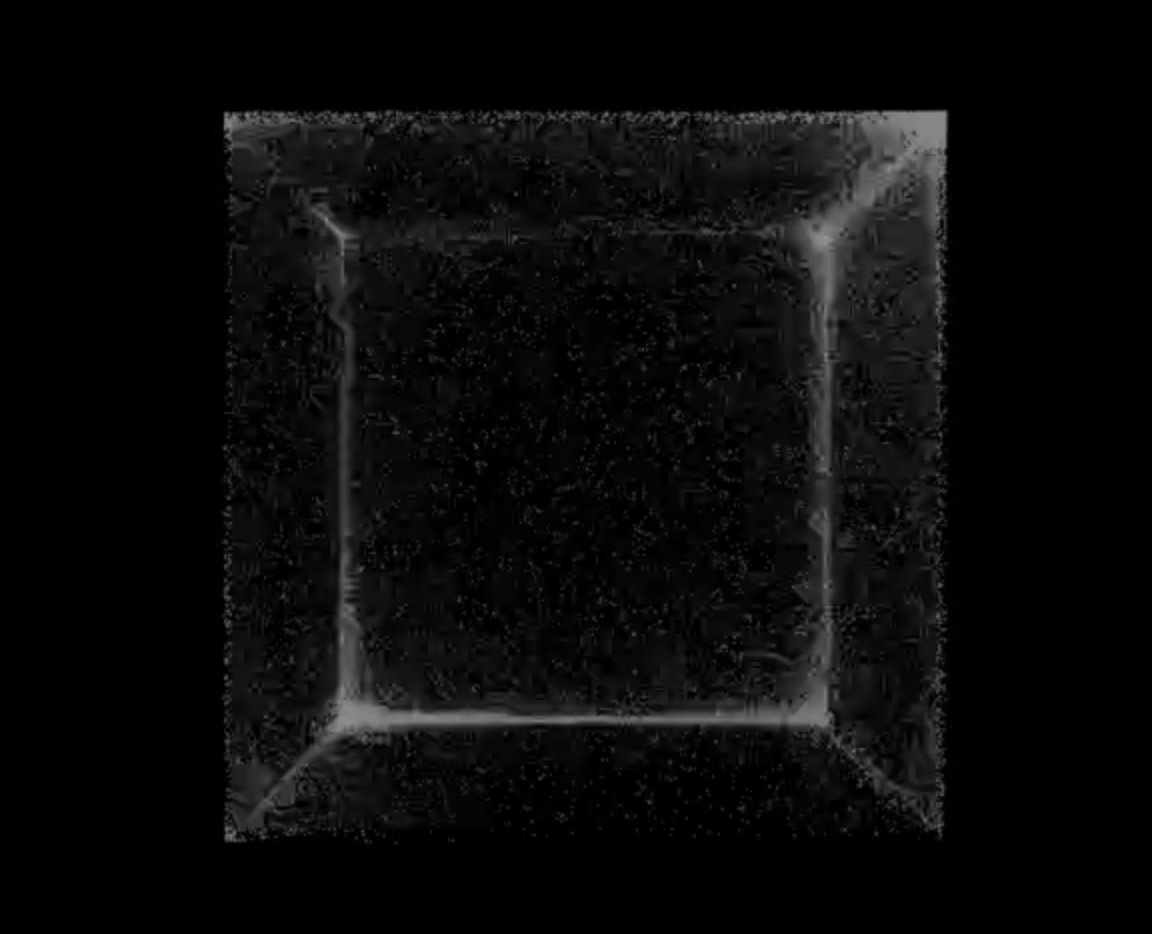
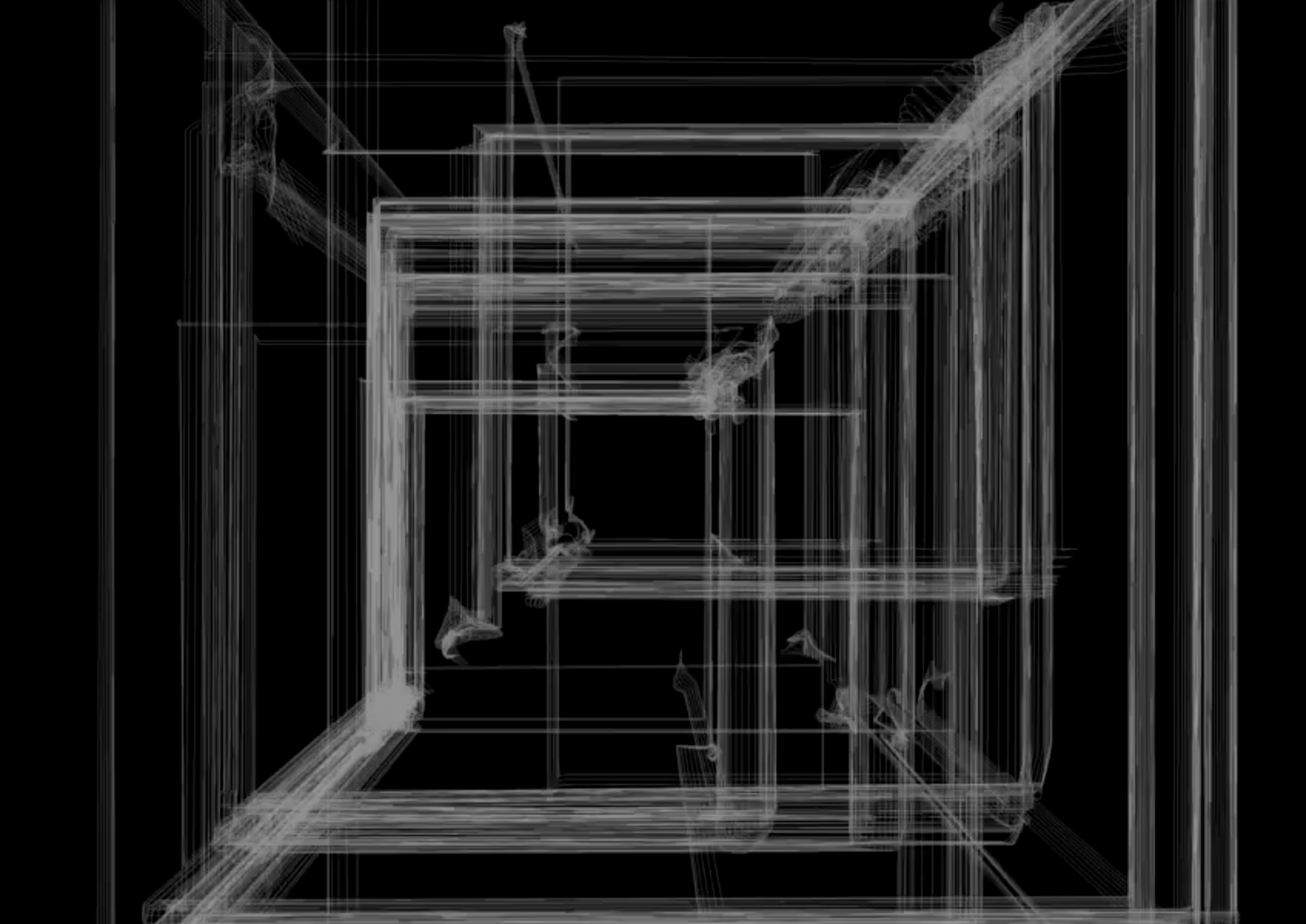
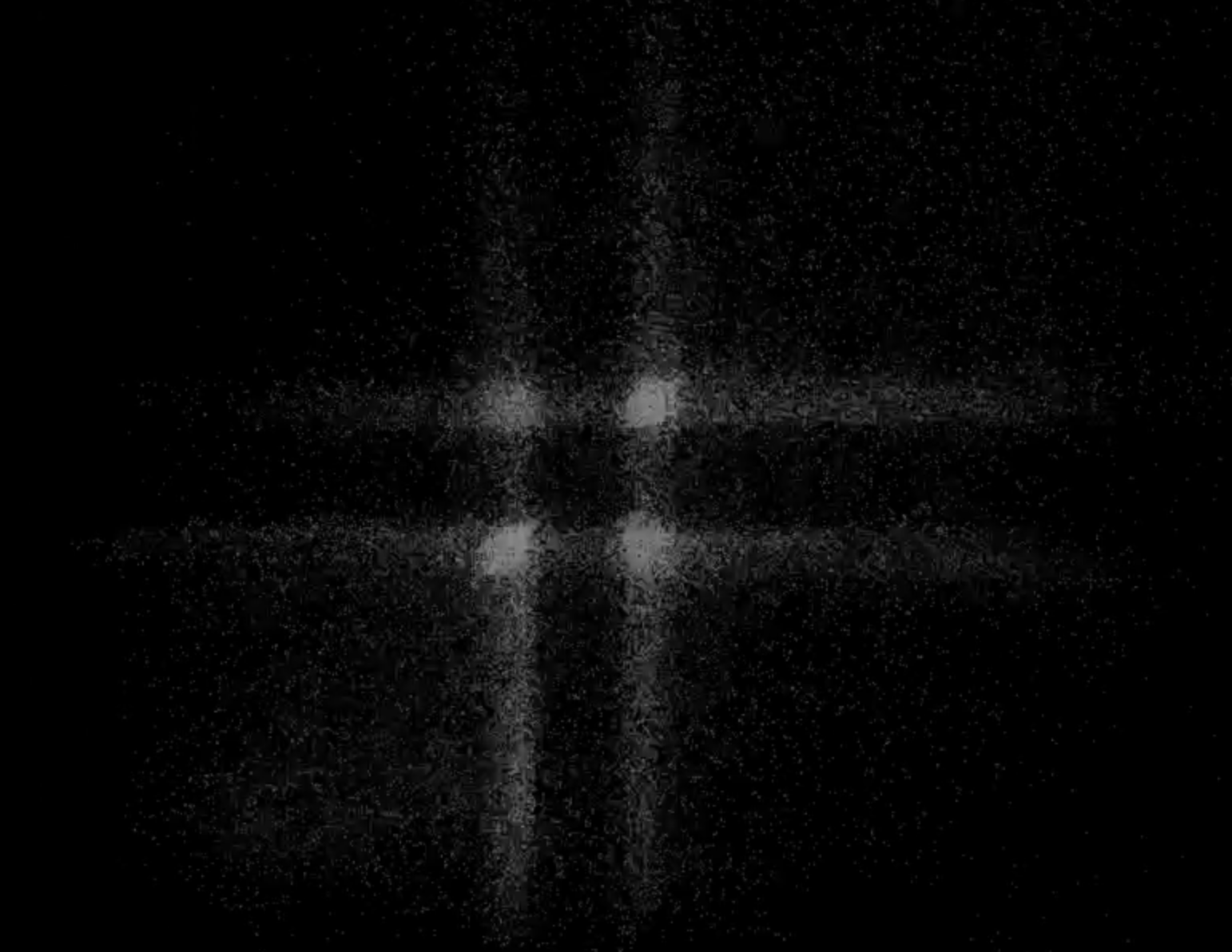
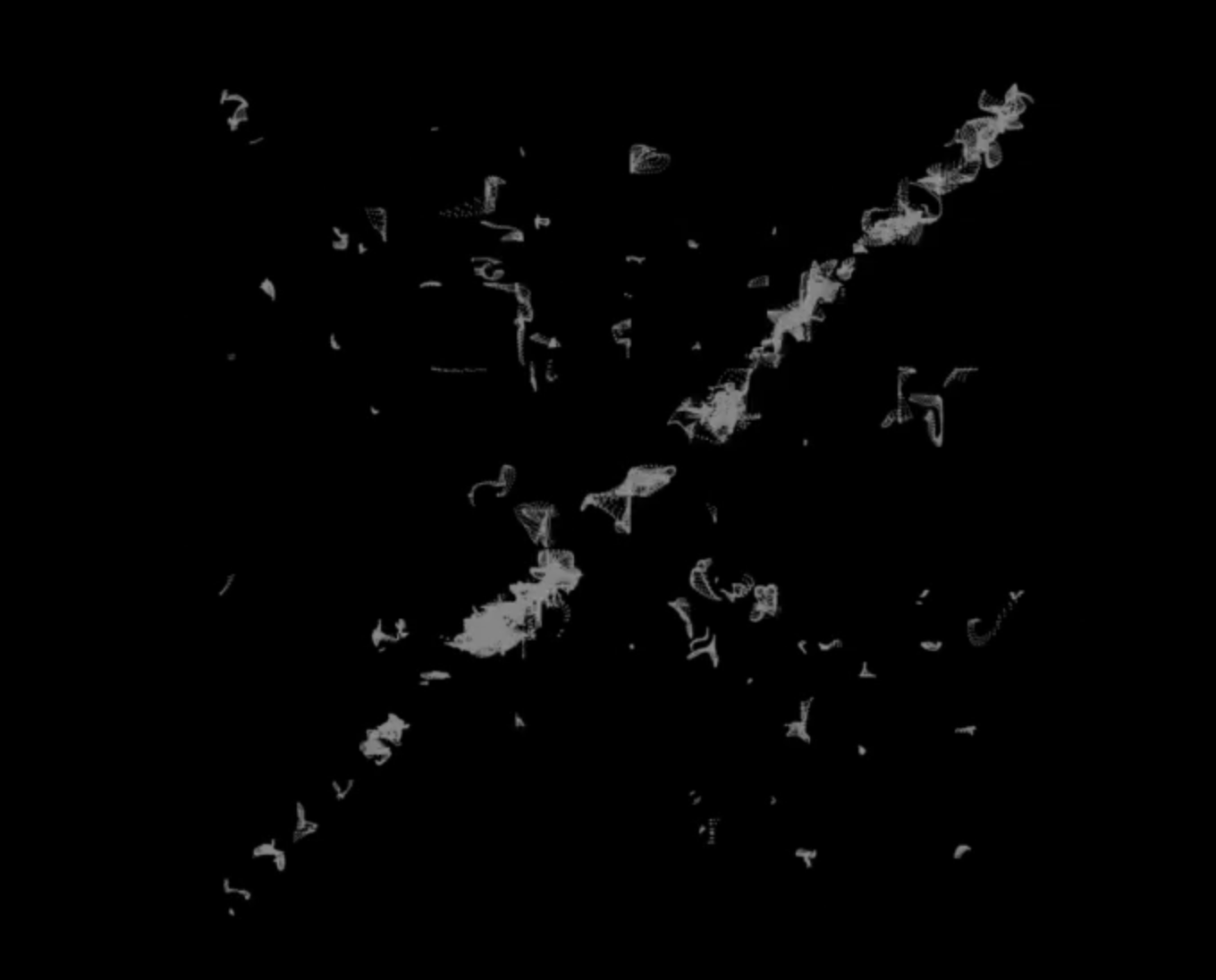
Early sketches for Fragment I were used to think through the behavior of the particle field before the first audiovisual form was settled. These images trace a gradual movement from volume and frame to line, field and fragment.
They do not function as storyboards. They are visual thoughts — small studies of enclosure, axis, density, dispersion and the temporary coherence of a shape.
Form as a Temporary State
The visual field begins with particles and motion. What becomes visible is a structure held together for a brief moment.
As the particle field shifts, contours gather and drift away again. Deformation is part of the life of the form, and each transition becomes one of the ways the work thinks through visibility.
A More Skeletal Spatial Field
The second fragment moves toward a more skeletal spatial field. Wireframe forms accumulate, separate and reconnect across depth, producing structures that remain visibly incomplete and unstable.
Density shifts between clustered masses and sparse spatial relations, extending Fragment from particle motion toward a more architectural condition.
From Motion to Structure
Fragment is concerned with how something internal becomes legible as structure. Motion, density, attraction and dispersion gradually give the particle field a visible organization.
The resulting shapes remain open and mutable. A form can gather, stretch, fragment and reorganize without settling into a final image, allowing the work to stay inside transformation instead of presenting a single resolved object.
Sound as Energy and Rhythm
The sound draws on the weight, pulse and abrupt changes of energy associated with dubstep, while developing those impulses through computer-music processes.
Sound and image move together inside one real-time field. Rhythmic pressure, contrast and changing density intensify the sense that both sonic and visual form are always in motion.
Real-Time Audiovisual System
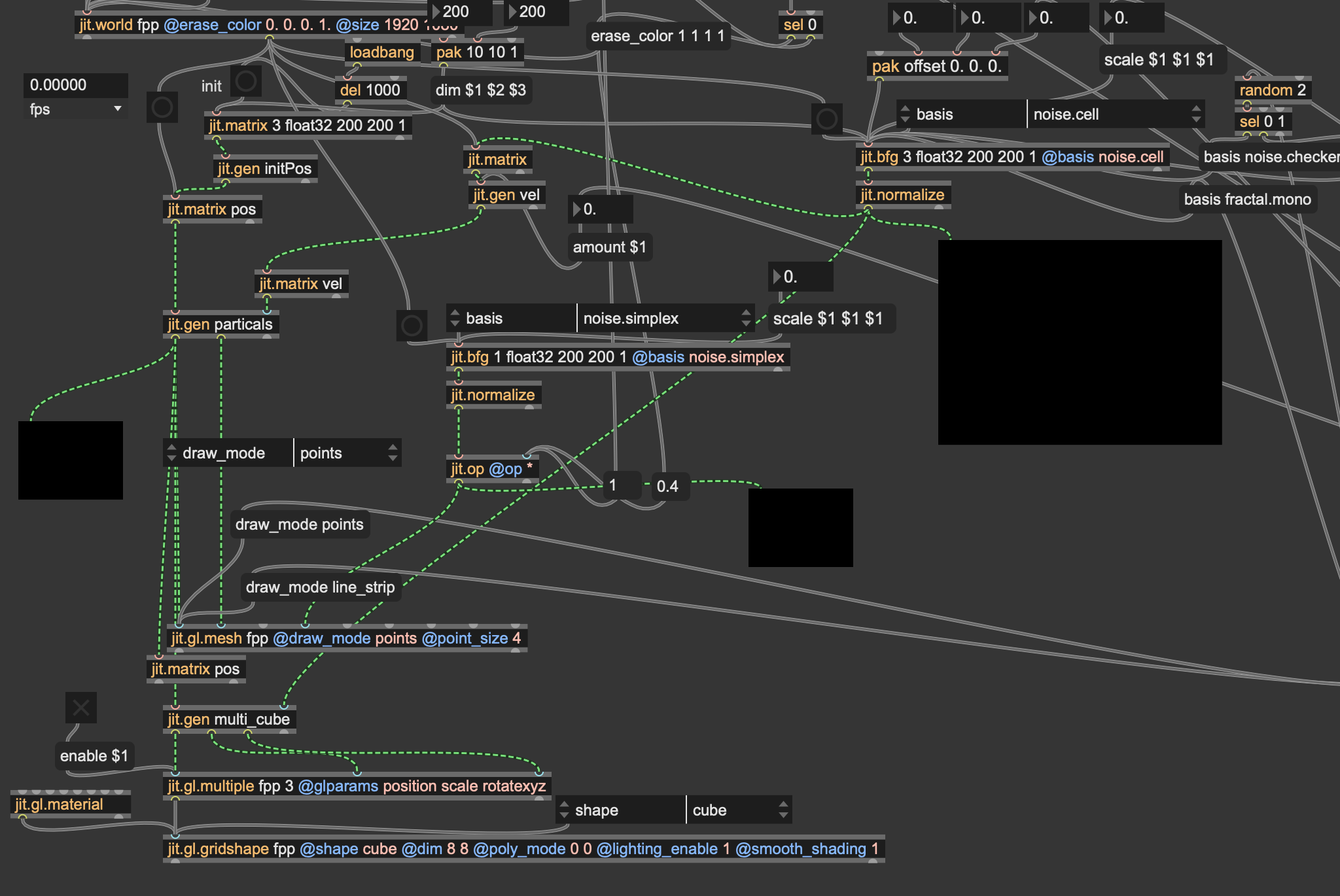
The work was created entirely in Max/MSP Jitter, with sound and visual programming by Liu Hao. The system combines a custom particle engine with live image generation and sound processes, allowing the piece to unfold as one continuous audiovisual environment.
- Visual systemCustom real-time particle engine
- Visual processParticle motion · deformation · fragmentation · continuous transformation
- SoundReal-time computer music informed by the energy and rhythm of dubstep
- EnvironmentMax/MSP · Jitter
- Current partsFragment I · 2025 · Fragment II · 2026
Work Archive
- Title
- Fragment
- Period
- 2025–2026
- Artist
- Liu Hao / 刘昊
- Form
- Ongoing real-time audiovisual series
- Sound & visual programming
- Liu Hao
- Current parts
- Fragment I · Fragment II
- Software
- Max/MSP · Jitter
- Visual system
- Custom real-time particle engine
- Process material
- Creation-period sketches and Max/MSP Jitter working view
- Documentation
- Fragment I ↗ · Fragment II ↗