Performative electroacoustic work · 2011
Memory of Orchestra
A generation remembers the orchestra while holding the device that will reorganise how music is made.
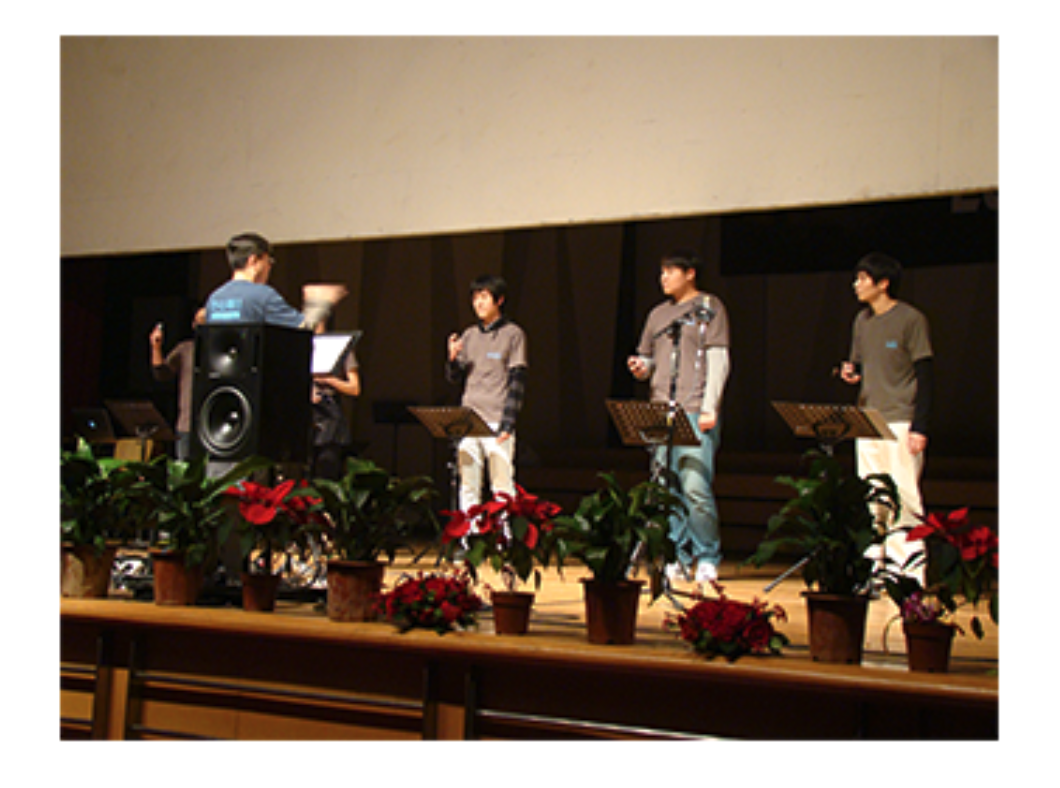
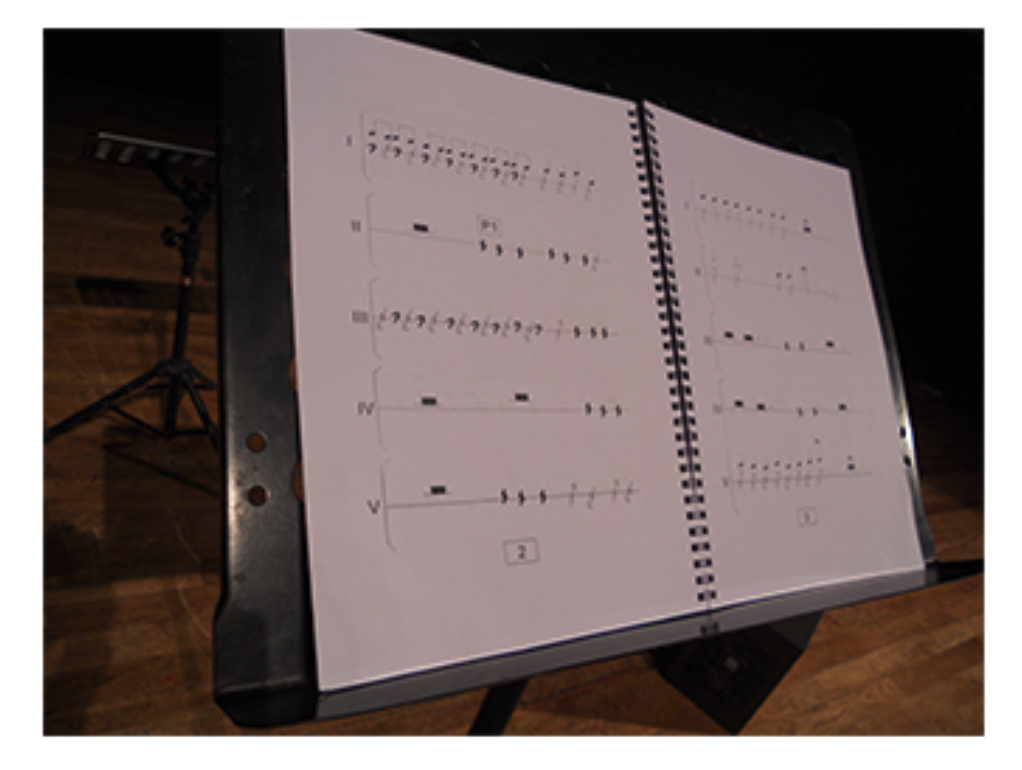
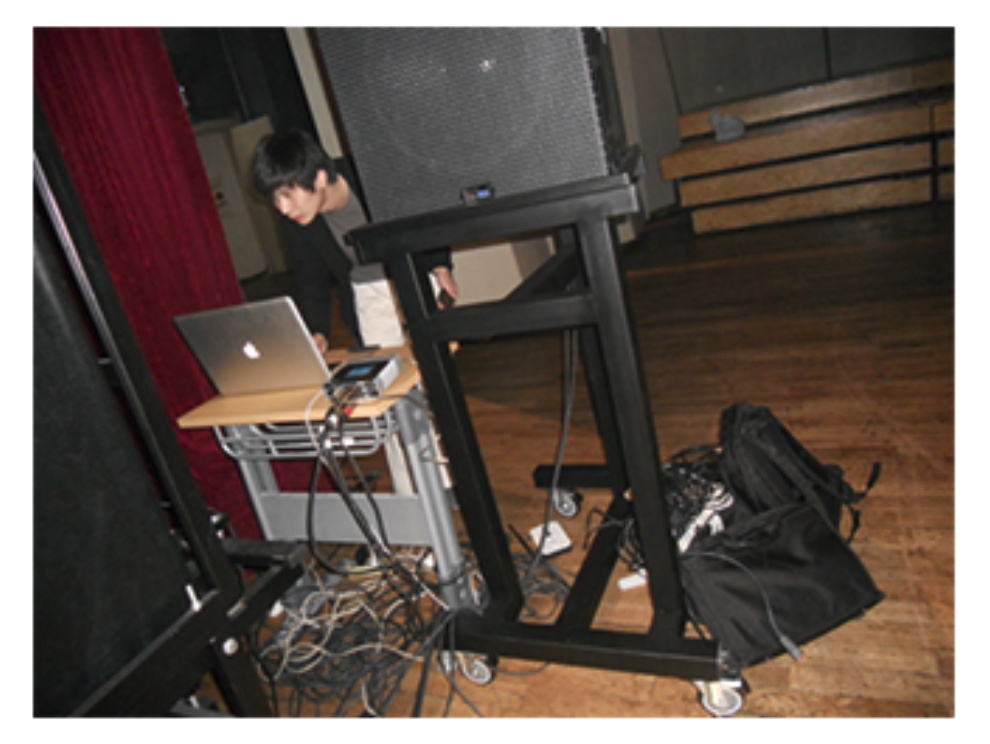
Created in 2011, Memory of Orchestra stages a change in the production of music. The posture of the orchestra remains—performers, score, stands and collective discipline—while its material basis is rebuilt through iPhones, bodily movement, software and sound generated in real time.
[513教室]电子乐团
An Orchestra Remembered
The work begins with a distance: orchestral music can remain emotionally powerful even when the live orchestra is no longer part of everyday experience.
For Liu Hao’s generation, born in the mid-1980s, the orchestra could arrive as an inherited image, a recorded sound, a cultural memory or an occasional encounter. Its scale and emotional weight remained, while the social and technological conditions surrounding music were already changing.
The title refers to fragments rather than restoration. What returns is not a historical orchestra reconstructed intact, but pieces of its memory: collective presence, musical discipline, the score, the concert stage and the sensation of many bodies producing one changing field of sound.
Orchestral concerts were not a frequent experience for the artist’s generation, yet orchestral music retained the power to touch them. By 2011, attention had shifted toward the iPhone. The work constructs a new-age orchestra from those devices and uses it to recall the missing feeling of the classical orchestra.
A Generation Changes Its Instrument
By 2011, the smartphone had become a more immediate object of attention than the classical orchestra for many young people. The work does not treat this as background information. It makes the shift itself visible on stage.
A device associated with communication, media and private daily use enters a collective musical formation. The personal screen is placed inside the discipline of an ensemble; individual gestures are coordinated as part of a shared temporal structure.
The change is musical, social and material at once. It concerns the sounds being produced, the objects held by performers, the habits of attention brought into the concert hall and the tools through which a generation begins to imagine making music.
The Orchestra as an Action
The work is legible before a note is heard: performers take the positions of an orchestra, stand behind music stands, read from a score and hold iPhones as their instruments. The substitution is the action.
This stage image turns technological change into contemporary performance language. The orchestra is revealed as more than a collection of acoustic instruments. It is also an arrangement of bodies, attention, instruction, synchronisation and authority.
Once its instruments are replaced, the orchestral form becomes newly visible. The familiar institution remains in outline, while the objects and processes that produce its sound belong to another era. Memory and technological change occupy the same stage at the same time.
From Instrumental Ensemble to Real-Time System
Each iPhone functions through its touchscreen and three-axis motion sensor. Touch, orientation and bodily movement become performance data and musical action.
Max/MSP manages the interaction logic and the real-time organisation and modification of sound. Csound generates the synthesized material. The system allows sound to be produced and transformed during the performance rather than delivered as a fixed playback sequence.
The ensemble therefore operates across several connected layers: performers follow a score, physical gestures enter the software system, computation interprets and transforms those gestures, and synthesized sound returns to the concert space as a collective result.
What the audience sees is a group of bodies holding familiar personal devices. What the audience hears is a computational ensemble whose instrument exists across touchscreens, motion sensors, software, synthesis and coordinated action.
The Production of Music Has Changed
The work fixes a historical image: music production moving from specialised instruments and established institutions toward personal computation and programmable systems.
The shift is larger than a change of sound source. It reorganises who can hold an instrument, what can count as an instrument, where composition resides and how an ensemble can be coordinated. The musical work is distributed across score, body, device, sensor, software and synthesis.
On this stage, the memory of the orchestra and the machinery of a new musical culture occupy the same frame. The score, the players and the collective form remain; the means of production have changed.
Work Archive
- Title
- Memory of Orchestra
- Year
- 2011
- Duration
- 7′40″
- Form
- Performative electroacoustic work for iPhone ensemble
- Creator
- Composition and programming by Liu Hao / 刘昊
- Performers
- [Classroom 513] e-LIVE ORCHESTRA / [513教室]电子乐团
- Performances
- Central Conservatory of Music and China Conservatory of Music, Beijing, 2011
- Interface
- iPhone touchscreen and three-axis motion sensor
- Interaction and processing
- Max/MSP
- Sound synthesis
- Csound
- Sound process
- Sound generated and modified in real time
- Documentation
- Performance photographs, score and original project brief